The Mini Cooper's Enduring Journey as a Cultural and Racing Icon
From its humble beginnings as a fuel-efficient answer to a national crisis to its undeniable status as a global symbol of style and racing prowess, the Mini Cooper culture & history is a fascinating tale of innovation, underdog victories, and enduring charm. This isn't just the story of a car; it's the narrative of an icon that defied expectations, danced with celebrities, and conquered the toughest rally tracks.
At a Glance: What Makes the Mini Cooper So Special?
- Born from Necessity: Created in 1959 amidst the Suez Crisis for fuel efficiency.
- Design Revolution: Alec Issigonis’s transverse engine and wheels-at-the-corners layout maximized space and handling.
- Racing Royalty: Transformed by John Cooper into a rally legend, dominating the Monte Carlo.
- Cultural Icon: Beloved by stars, a symbol of the "Swinging Sixties," and featured in film.
- Modern Revival: Reimagined by BMW in 2001, blending classic spirit with cutting-edge tech.
- Future Forward: Continues to innovate with immersive digital experiences and sustainable designs.
The Spark of Ingenuity: How a Crisis Forged a Legend
Imagine Britain in the late 1950s. The Suez Crisis had just hit, fuel was scarce, and the demand for small, economical cars skyrocketed. This wasn't just a market opportunity; it was a national need. Sir Leonard Lord of the Morris Company (and later, the British Motor Corporation - BMC) knew exactly what was required: an affordable car that could comfortably seat four adults, offer impressive fuel efficiency, and yet somehow be fun. The man he tasked with this monumental challenge was the visionary designer Alec Issigonis.
Issigonis, a design genius, approached the problem with radical thinking. Instead of simply shrinking existing car designs, he reimagined the entire layout. His groundbreaking Mark I Mini debuted in 1959, and it was nothing short of revolutionary. It featured a transverse engine layout – meaning the engine was mounted sideways – which freed up an incredible amount of interior space for passengers and luggage. The wheels were pushed right to the corners of the chassis, offering unparalleled stability and a "go-kart" like handling feel. And, crucially, it utilized front-wheel drive, further enhancing space efficiency and agility. This ingenious design laid the foundation for not just a car, but for the future of compact automotive engineering. Its sheer cleverness set the stage for the evolution of Mini's iconic design for decades to come.
When Racing Blood Met British Charm: The John Cooper Revolution
The Mini, in its original form, was already a marvel of engineering and practicality. But it took the keen eye of British race car designer John Cooper to see its hidden potential—a fierce racing spirit waiting to be unleashed. Cooper, already a celebrated figure in motorsports, recognized the Mini's low center of gravity, wide stance, and nimble handling as perfect ingredients for a rally champion.
In 1961, a fateful collaboration began between Issigonis and Cooper. While Issigonis initially harbored reservations about turning his sensible commuter into a speed demon, Cooper's persistence paid off. He introduced performance modifications that transformed the Mini: a more powerful engine, improved brakes, and sportier suspension tuning. The result? The birth of the Mini Cooper and the even hotter Mini Cooper S models. The Classic MINI Cooper 997 also joined the ranks, becoming an instant favorite among enthusiasts. This fusion of practicality and performance cemented the Mini's place not just on suburban streets, but on the world's most challenging race tracks.
From Underdog to Legend: Conquering the Rally World
The Mini Cooper's entry into motorsports was immediate and dramatic. It wasn't long before its nimble size and surprising power began turning heads. In 1962, Pat Moss (sister of the legendary Stirling Moss) achieved MINI's first significant motorsport victory at the Netherlands Tulip Rally, signaling that this little car was a serious contender.
But it was the Monte Carlo Rally where the Mini Cooper truly etched its name into racing folklore. Picture this: a tiny British car, no bigger than a couple of bathtubs, going head-to-head with much larger, more powerful European machines across treacherous icy mountain passes. Against all odds, the Mini Cooper S, driven by the legendary Paddy Hopkirk, claimed a sensational victory in 1964. This wasn't a fluke; the Mini Cooper S went on to win again in 1965 and 1967. The 1966 victory was notoriously snatched away by a controversial disqualification due to a technicality involving headlight dipping mechanisms – a decision many still debate today. Regardless, these triumphs cemented Mini's incredible racing legacy as an underdog racing icon, proving that skill, agility, and clever engineering could triumph over brute force.
The sight of a Mini Cooper S sliding around a hairpin bend, headlights blazing, became an enduring image of motorsport grit and glory, forever linking the Mini to rally racing.
The Mini Goes Mainstream: A Cultural Phenomenon
By the mid-1960s, the Mini was more than just a car; it was a bona fide cultural symbol. It wasn't just practical; it was fashionable, playful, and utterly British. As the "Swinging Sixties" exploded with youth culture, fashion, and music, the Mini became its four-wheeled mascot.
Celebrities flocked to it. Imagine The Beatles, symbols of a generation, zipping around London in their customized Minis. Peter Sellers, the iconic actor, owned a bespoke Mini with wicker trim. Supermodel Twiggy, a fashion trailblazer, also drove one. The Mini was accessible yet chic, making it a lifestyle statement for everyone from film stars to fashionistas. It epitomized a modern, confident British identity—cool, cheeky, and utterly individual. The Mini also played a starring role in one of cinema's most iconic car chases in "The Italian Job," forever linking its image with daring capers and British wit. It's truly remarkable how Mini captured pop culture's heart in such a definitive way.
A Modern Rebirth: BMW's Vision for MINI
While classic 1960s Minis remained beloved artifacts of automotive history, the brand itself faced challenges as the decades wore on. The original Mini ceased production in 2000, marking the end of an era. However, the story was far from over. In 2001, under the ownership of the BMW Group, the MINI brand was triumphantly revived.
BMW understood the delicate balance required: to honor the original Mini's charm, spirit, and design philosophy while integrating contemporary technology, safety, and performance. The modern MINI models retain the essence of Issigonis's vision—compact size, wheels at the corners, and an emphasis on fun-to-drive handling—but with a distinctly 21st-century twist. These new MINIs quickly found a new generation of admirers, proving that the iconic design could adapt and thrive in a new millennium. They embody a perfect blend of nostalgic appeal and cutting-edge engineering.
Beyond the Production Line: A Gallery of Unique Minis
Part of the Mini's enduring appeal lies in its adaptability and the sheer affection it inspires. Over the years, this led to some truly unique, one-off creations that pushed the boundaries of what a Mini could be:
- The MINI Paul Smith One (1999): Celebrating the 40th anniversary, fashion designer Paul Smith created a vibrant, striped Mini, showcasing its artistic potential.
- The 6.3-meter MINI Cooper S Limousine (XXL, 2004): A stretched limousine complete with a whirlpool, proving that even a Mini could be extravagantly luxurious.
- The MINI Ice Cream Van: Inspired by the quirky style of 1960s Batman, this delightful creation showcased the Mini's playful side.
- Mr. Bean's Minis: The bumbling character famously drove multiple Minis throughout his adventures (his first was orange), making the car an inseparable part of his comedic identity.
- The MINI ACV 30 (mid-1990s): This concept car was highly influential, hinting at the design direction for the future BMW-era MINIs.
- The MINI Wildgoose: A compact motorhome conversion, demonstrating the ingenious ways owners maximized the Mini's interior space.
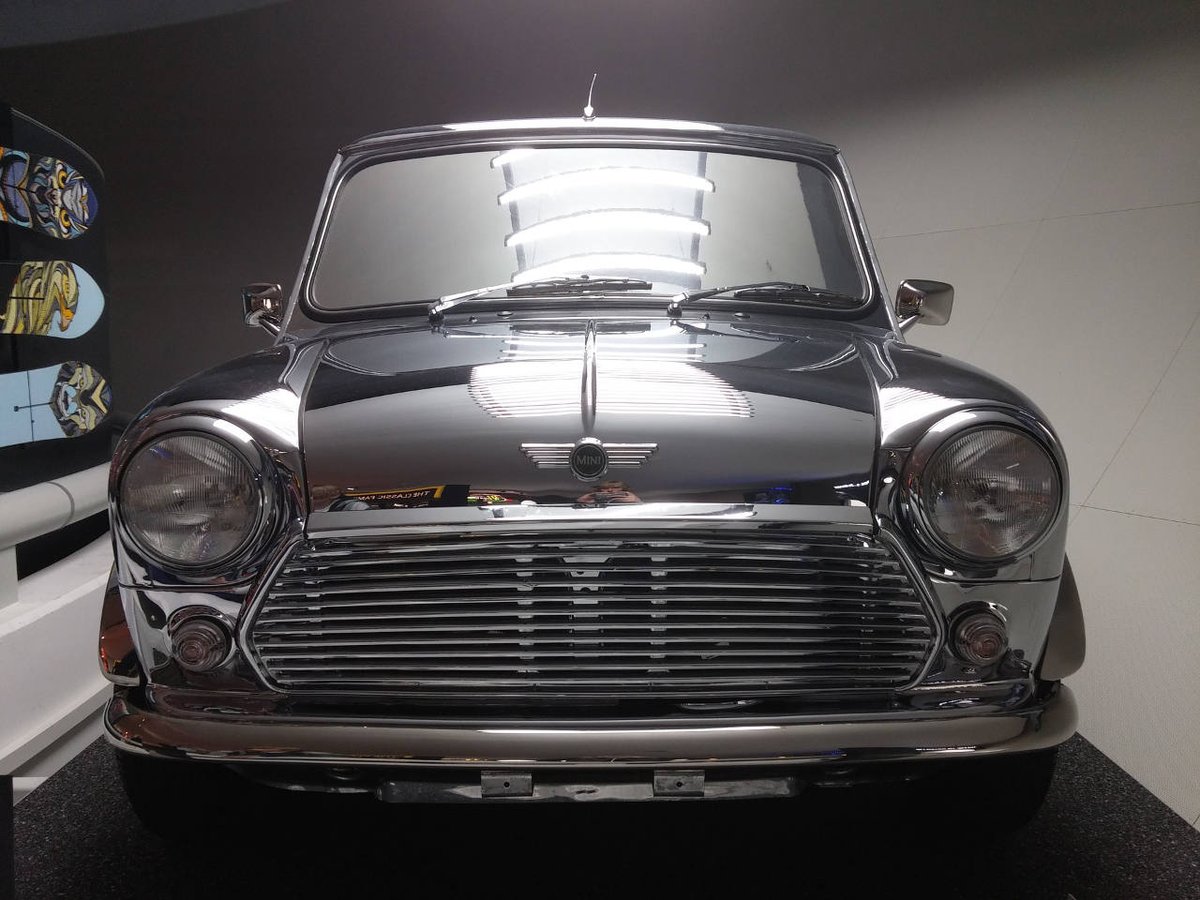
- The Chrome-Wrapped MINI David Bowie (40th Birthday): A dazzling, mirror-like Mini designed by Bowie himself, reflecting its iconic status.
These bespoke creations underscore the Mini's status as a canvas for creativity and a beloved object of personalization.
The Future is Immersive: Driving the Next Generation of MINI
Today, the MINI brand continues to look forward, redefining the driving experience while staying true to its roots. The next generation of MINIs focuses on an immersive, user-centric environment that blends cutting-edge technology with the familiar joy of driving a MINI.
Key features of these future-forward models include:
- World-First Circular 9.4” OLED Display: A stunning central display that harks back to the classic central speedometer, but now offers vivid, customizable graphics and information.
- Up to Eight MINI Experience Modes: These modes transform the interior ambiance, adjusting everything from dashboard visuals to ambient lighting, allowing drivers to tailor their journey.
- Panoramic Moonroof: Bringing the outside in, enhancing the feeling of spaciousness.
- Ambient Light Projections: Creating dynamic and personalized interior lighting effects.
- New Styles and Vibrant Silver Rooftop Color: Offering fresh aesthetic choices that evolve the classic MINI look.
- Spike, MINI's First Fully-Fledged Voice Assistant: A smart, interactive co-pilot that enhances connectivity and convenience, making the car an even more intuitive partner on the road.
These innovations show that the innovations driving modern MINI models are focused on creating a truly unique and engaging interaction for every driver. The goal is to deliver not just transportation, but an experience that excites the senses and makes every journey memorable. If you're eager to discover the latest evolutions and models, you can learn more about au mini and see how this iconic brand continues to push boundaries.
Beyond the Wheel: The Enduring Legacy of an Icon
The Mini Cooper's journey from a humble economy car to a global cultural and racing icon is a testament to brilliant design, tenacious spirit, and a captivating personality. It proved that great things often come in small packages and that an underdog can indeed conquer the world. Its story is woven into the fabric of automotive history, British identity, and global popular culture.
Whether you're a classic car enthusiast admiring a meticulously restored Mark I, a rally fan recalling its Monte Carlo triumphs, or a modern driver enjoying the tech-forward agility of a new MINI, the spirit of adventure and ingenuity that defined its creation continues to resonate. The Mini Cooper isn't just a vehicle; it's a feeling, a statement, and an enduring symbol of joy on four wheels. Long may its journey continue.